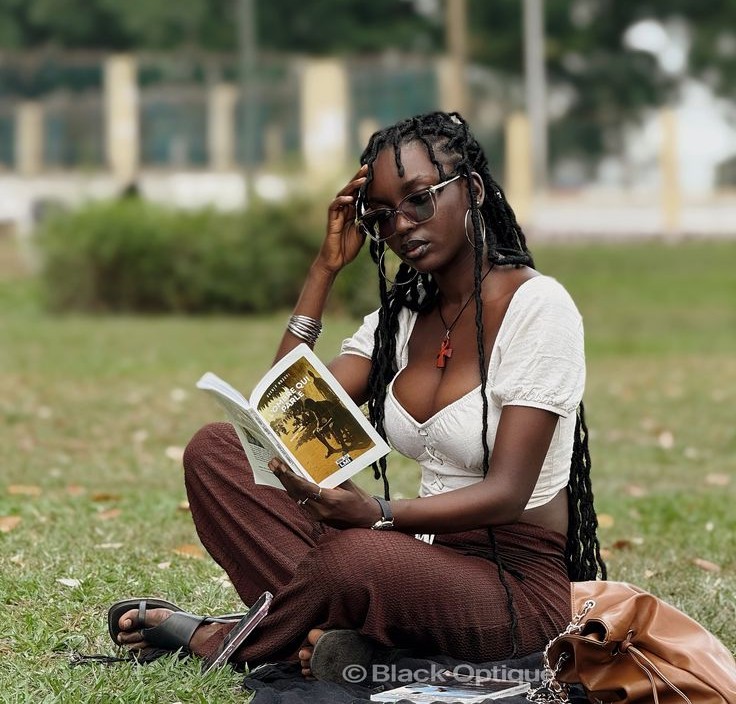
The African reader hasn't stopped loving good stories. They just want to see themselves in them.
For a long time, if you were an African student who wanted to be considered a serious reader, there was a familiar list of books waiting for you.
Shakespeare.
Charles Dickens.
George Orwell.
Jane Austen.
Chinua Achebe, Wole Soyinka and a handful of other African writers might appear somewhere in the curriculum, but much of the reading culture around young people was still shaped by books written somewhere else, often for societies with completely different histories and realities.
And for generations, that was simply normal.
You read about English boarding schools, American high schools, European families, foreign cities and characters dealing with problems that sometimes felt very far from your own life.
But something has changed. The young African reader today has options.
A teenager in Accra can open a book and read about a girl navigating SHS, church, WhatsApp drama, family expectations and a complicated crush.
A young Nigerian can read a romance set in Lagos where the characters speak and behave like people they actually know.
A Kenyan reader can find science fiction imagining an African future rather than another version of London or New York.
And suddenly, reading feels different. It feels personal. That is the real shift happening.
Young Africans don't just want African books. They want familiar worlds.
There is something powerful about recognizing yourself in a story. You know the neighbourhood. You understand the jokes. You recognise the auntie who asks uncomfortable questions about marriage.
You know what it means when your mother says, "We need to talk when you get home." You understand the pressure to study something "serious" instead of pursuing writing, music, fashion or film. You recognise the relationship between parents and children, the role of church and religion in family life, the expectations around respect, money, education and marriage.
And sometimes, even the smallest detail can make a story feel completely different. A character taking a trotro. Someone arguing over MTN data. A family gathering becoming an interrogation about your relationship status. Friends switching effortlessly between English and local slang. A character mentioning Accra's traffic, Lagos' chaos or Nairobi's nightlife.
These details aren't decoration. They are the texture of people's lives. And when readers encounter them in fiction, there is a feeling that Western literature often cannot provide: "These people understand my world."
This doesn't mean African youth have stopped reading Western authors
The shift is not as simple as replacing Shakespeare with contemporary African writers. Young African readers still consume Western books, films, television and online culture at enormous levels. Harry Potter still has fans. Romance readers still devour American and British authors. Young people still read fantasy, thrillers and classics from outside Africa.
The difference is that Western literature no longer has to be the default definition of good literature.
A reader can enjoy Jane Austen on Monday, a Nigerian romance novel on Tuesday, a Ghanaian coming-of-age story on Wednesday and a Japanese manga on Thursday. The internet has dramatically expanded the bookshelf. And African writers are finally competing for attention on that same shelf.
Social media has changed how African books are discovered
This may be one of the biggest reasons the shift feels so dramatic. A bookstore used to be one of the main places where you discovered books.
Now?
TikTok can recommend one. Instagram can make you curious about another. YouTube can introduce you to an author. A WhatsApp status can make ten people ask, "What book is that?"
Book communities can turn an unknown author into a conversation overnight. This has created a particularly powerful ecosystem around reading communities.
Platforms such as TikTok have helped create book-focused communities through trends such as #BookTok, while African publishers and authors increasingly use social platforms to reach readers directly.
The result is that a young person doesn't necessarily need a teacher, librarian or bookstore employee to tell them what they should read. Their friends are now the recommendation engine. And friends tend to recommend books that feel relevant.
The African romance boom is a perfect example
For years, romance stories available to African readers were often dominated by Western settings. The characters lived in New York. They worked in London. They met in Paris. Their families behaved according to cultural expectations that might have little resemblance to the reader's own.
There is nothing wrong with any of that. But imagine being a young African woman reading a romance where the heroine's mother is worried about what people will say. Where the relationship is complicated by family expectations. Where money matters. Where religion matters. Where tradition clashes with modern dating. Where the character has to explain her relationship to relatives who seem to have appointed themselves the relationship police.
Suddenly, the conflict isn't abstract. You know these people. You have met them. Maybe you are one of them. That emotional familiarity can make locally rooted romance incredibly compelling.
Then there is African science fiction
This is where things get even more interesting.
African writers aren't simply recreating Western genres with African names. Some are asking completely different questions.
What does an African city look like in 2050?
What happens when technology develops alongside African traditions rather than replacing them?
What does artificial intelligence mean for societies dealing with inequality, migration, identity and rapid urbanization?
What would an African future actually look like if Africans imagined it themselves?
Writers such as Nnedi Okorafor have helped push Africanfuturist and Africanfuturism-related ideas into global conversations, while a broader generation of African speculative-fiction writers continues to expand what African storytelling can look like.
That matters because for a long time, futuristic stories often imagined Africa as something that needed to be rescued, developed or transformed. Now African writers are increasingly saying: What if we imagine the future ourselves?
Local language makes stories feel even closer
There is another powerful advantage African writers have.
Language.
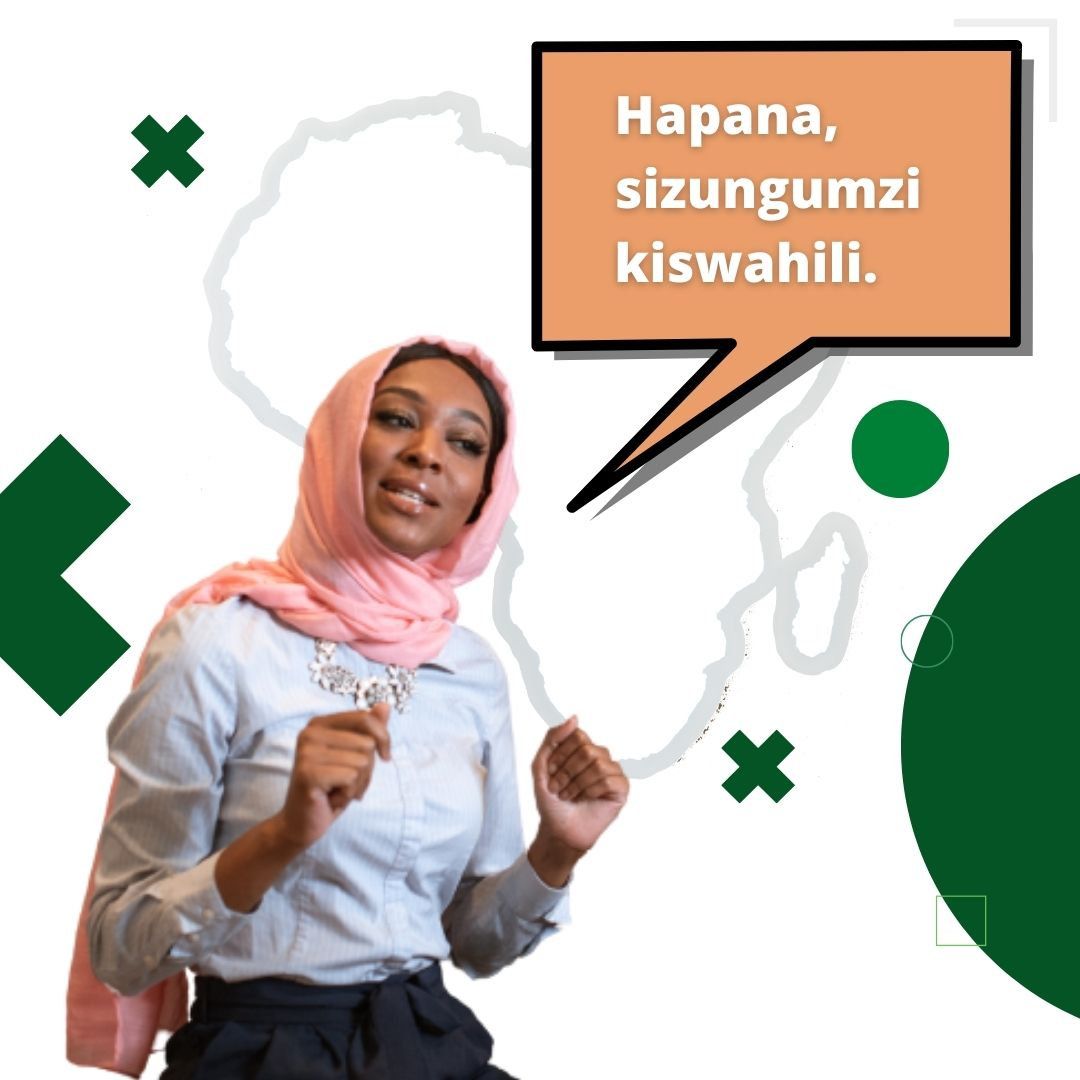
Not necessarily writing entire books in Twi, Yoruba, Swahili, Ga, Zulu or another African language. Sometimes it is simply the way characters naturally speak. A sentence in Ghanaian English. A Nigerian expression. Kenyan slang. South African township language. The little switches between formal English and the language people actually use with their friends.
Those details can communicate personality and culture faster than several paragraphs of explanation.
A Western writer can research an African city. An African writer who grew up there doesn't have to research what it feels like when the electricity goes off during dinner. They lived it. That difference matters.
Home-grown authors are also writing about problems older literature often ignored
The contemporary African writer has a different set of questions to work with.
What does it mean to be young and broke in an expensive city?
How does migration affect families?
What happens when your parents want one life for you and you want another?
How does social media change relationships?
What happens when education doesn't guarantee employment?
How do young Africans navigate faith, sexuality, ambition, family and modern culture?
What happens when someone leaves Ghana for Europe and discovers that "abroad" isn't the magical place everyone imagined?
These are not theoretical questions. They are everyday conversations. And fiction gives young people a way to explore them without having someone stand over them and say, "This is what you should think."
There is also a hunger for stories that don't constantly explain Africa to outsiders
This is subtle but important.
African literature written primarily for an international audience can sometimes carry the burden of explaining Africa. The writer has to introduce the culture. Explain the tradition. Translate the expression. Describe the food. Provide context.
But when an African writer is writing for African readers, they can simply say it. No explanation required. The character enters a trotro. The reader understands. Someone's grandmother starts speaking in a local language. The reader understands the mood. A parent calls their child by their full name. The reader knows trouble has arrived.
That shared cultural knowledge creates intimacy between writer and reader. It is one reason local stories can feel effortless in ways that imported stories sometimes don't.
The internet has also made African writers more visible
This is perhaps the biggest structural change.
An African author no longer has to depend entirely on traditional publishing gatekeepers to find an audience.
They can build a following online.
They can publish digitally.
They can serialize stories.
They can interact directly with readers.
They can promote their books through social media.
They can sell to readers outside their home country.
And an author in Lagos can potentially find readers in Accra, Nairobi, Johannesburg, London and Toronto without having to physically place their book in every bookstore.
That changes the economics of African storytelling. The audience is no longer limited by geography.
And the diaspora is part of this story too
There is a huge audience of Africans living outside Africa who are hungry for stories that reconnect them to home.
Someone born in London to Ghanaian parents may understand British culture perfectly well and still want to read a story where the grandmother sounds like their grandmother.
A Nigerian-American teenager may consume American culture all day and still want a book that understands the strange experience of being Nigerian at home and American outside it.
A second-generation African doesn't necessarily want stories that are exclusively African or exclusively Western.
They often want both. That creates an enormous opportunity for African writers. The audience for African stories is not only sitting in Africa.
It is scattered across the world.
The bigger cultural shift is about ownership
For generations, African young people were often taught about Africa through narratives created elsewhere.
Now they are increasingly asking: What happens when we tell our own stories?
Not stories where Africa is simply the setting for someone else's adventure. Not stories where African characters exist only to support a Western protagonist. Not stories where African cities appear only as places of poverty, conflict or exoticism.
Stories about ordinary people. Love. Friendship. Ambition. Mistakes. Magic. Technology. Family. Heartbreak. Comedy. Adventure. Wealth. Failure.
The completely normal chaos of being young. Africa doesn't need to be extraordinary in every story. Sometimes a story can simply be about two people falling in love in Accra. And that is enough.
But African publishing still has work to do
The excitement around home-grown literature shouldn't hide the industry's challenges. Books can still be expensive relative to what many young Africans can comfortably spend.
Distribution remains difficult across many African markets. Many authors struggle to reach readers outside major cities. Local publishing ecosystems vary significantly from country to country. And a viral social-media moment doesn't automatically translate into sustainable income for an author.
There is also the danger of assuming that anything labelled "African" will automatically succeed.
It won't.
Young readers are still readers. They want good writing. They want compelling characters. They want stories that move them. They want books they can't put down. Being African may get a book noticed. The story still has to make people care.
What this means for African writers
The opportunity is enormous.
But the answer isn't to write African stories simply because they are marketable.
Write stories that you genuinely understand.
Write the city you know.
Write the family dynamics you've experienced.
Write the slang your friends actually use.
Write the future you imagine.
Write the love stories you wish existed.
Write the fantasy worlds that would have excited you when you were sixteen.
And don't be afraid to make the story universal. A story can be deeply Ghanaian and still move someone in Canada. It can be unmistakably Nigerian and still resonate with a reader in Kenya. It can be rooted in Nairobi and still find a home in London.
Specificity is often what makes a story universal.
When a writer stops trying to make their world look generic enough for everyone and instead makes it feel real, readers from other places often become curious.
They want to enter that world.
And for young African readers, this is a good thing
There is no need to choose between African literature and Western literature.
Read both.
Read classics.
Read contemporary African fiction.
Read fantasy.
Read romance.
Read science fiction.
Read books from Asia, Latin America, Europe and everywhere else.
The point isn't to build another literary wall. The point is to make the bookshelf bigger.
For the first time, a young African reader has an unprecedented ability to say:
"I want to read stories from everywhere — but I also want stories that sound like home."
And African writers are increasingly giving them exactly that. The most exciting part isn't that young Africans are abandoning Western books.
It is that they no longer have to depend on them to find themselves in literature.
The African reader is discovering that home can be a setting, a language, a character, a future — and a story worth reading.
Sources & Methodology
Delviews article pages include source notes, correction links and editorial context so readers can evaluate trust at a glance.
Spotted an error? Submit a correction