You open your budgeting app at the beginning of the month. You enter your income, your fixed expenses, and your carefully planned grocery budget. You feel organized. You feel in control.
Then the week starts.
Transport fares go up. The trotro or danfo driver tells you the price has increased because of fuel. You have no choice but to pay. You go to the market, and the tomatoes that cost GHS 5 yesterday are now GHS 8. The onions are double what they were last week. By the end of the month, your budget is a joke. The app does not understand what is happening. It just shows you red numbers and tells you that you overspent.
You are not bad at budgeting. You are trying to budget in an economy that changes every single day. Standard financial advice assumes prices are stable. They are not. And when you are earning a survival wage, even small price increases throw everything off.
So let us talk about what actually works when food and transport prices change every week. Let us talk about survival tactics that do not require a perfect budget.
The Frustration You Probably Feel
Let us name what is happening. You are trying. You really are. You set aside money for food. You calculate your transport costs. You make a plan.
But the plan falls apart because the ground keeps shifting. Prices go up without warning. Your salary does not. You end up borrowing. You end up cutting back on things you should not have to cut back on. You feel like you are running on a treadmill that keeps getting faster.
And here is the thing nobody talks about: the mental exhaustion. Every decision becomes a calculation. Do I take this route or that route? Do I buy in bulk or buy what I need today? Do I eat out or cook? The constant mental arithmetic is draining. It leaves you with less energy for everything else.
You are not failing. The system is unstable. And you need strategies that work within that instability.
Why Monthly Budgeting Does Not Work
The traditional approach to budgeting assumes you know what things will cost. You set a monthly limit for food, transport, and other variable expenses. You track your spending against that limit.
But when prices change weekly, your monthly budget becomes meaningless. You cannot plan for a tomato price that doubles overnight. You cannot budget for transport fares that increase without warning. The numbers you entered on the first of the month are irrelevant by the second week.
The problem is not your discipline. The problem is the tool. A monthly budget is designed for a stable economy. It assumes predictability. When that predictability is gone, the budget stops being useful.
So what do you do? You shift from monthly budgeting to daily and weekly survival tactics.
Practical Tactic 1: Bulk Buying with Friends
One of the most effective ways to stabilize your food costs is to buy staples in bulk. But bulk buying requires capital. You cannot always afford to buy a whole bag of rice or a carton of oil on your own.
This is where groups come in.
Find two or three friends or neighbours who are also struggling with rising food prices. Pool your money together. Buy staples in larger quantities. Split the cost and the goods.
For example:
- A bag of rice might cost ₦50,000. Alone, that is too much. But if five of you contribute ₦10,000 each, you each get a share at a lower per-unit cost.
- A carton of cooking oil might be GHS 400. Split between four people, that is GHS 100 each for a litre of oil — cheaper than buying a small bottle at the market.
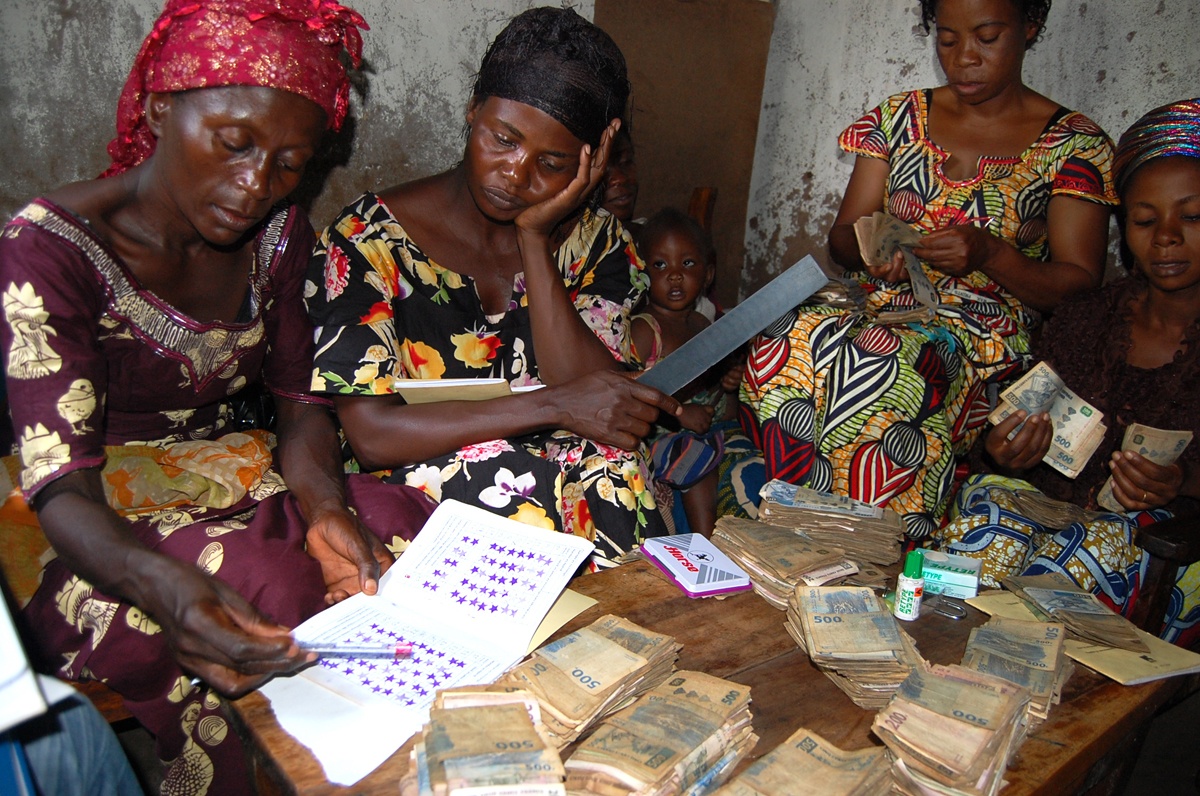
- In Kenya, women's chamas often do this. They pool resources to buy maize, beans, and cooking oil in bulk. Each member gets a portion at a much lower price than they would pay individually.
The key is consistency. Do this regularly. Make it a routine. Every month, when you get paid, put aside your bulk-buying contribution. Then buy together.
Practical Tactic 2: Lock Your Money Away the Day You Get Paid
Here is the problem with keeping your savings in a regular mobile money wallet or bank account. It is too accessible. Transport prices go up, you need cash, and you dip into it. Food prices spike, you need to buy something, and you dip into it. By the end of the month, what was supposed to be savings is gone.
The solution is to lock your money away. Use mobile money vaults or savings features that do not allow instant withdrawal.
In Ghana, MTN MoMo offers a savings wallet that limits withdrawals. In Nigeria, PiggyVest and Cowrywise allow you to lock funds for a fixed period. In Kenya, M-Pesa has similar features. These tools do not just save your money — they protect it from your own impulses and from the daily emergencies that always seem to come up.
Set up an automatic transfer on payday. Even GHS 20 or ₦500 is worth locking away. The idea is that once the money is in that vault, it is gone. You cannot access it for daily expenses. It becomes a separate fund that can only be withdrawn after a set period.
The psychological benefit is huge. You stop seeing that money as available. You learn to live on what remains. And over time, that locked-away money grows.
Practical Tactic 3: Calculate a Daily Average Instead of a Monthly Budget
Instead of planning for the whole month, plan for the day.
Calculate how much you can reasonably spend each day on food and transport. Then stick to that daily limit. If prices go up on one day, you adjust by spending less the next day.
Here is how to do it:
- Calculate your monthly income after fixed expenses (rent, utilities, debt payments).
- Divide that by the number of days in the month.
- That is your daily spending limit for food and transport.
For example, if you have ₦60,000 left after rent and utilities, that is ₦2,000 per day. Some days you might spend ₦2,500 because prices are high. Other days you spend ₦1,500 because you ate at home. The daily limit keeps you aware of your spending without forcing you into a rigid monthly plan that does not reflect reality.
You do not need an app for this. You can use a simple notebook, a note on your phone, or even just mental tracking. The goal is awareness, not perfection.
Practical Tactic 4: Have a "Running List" Strategy
When you go to the market, do not rely on memory. Have a list. But not just any list—a running list that you update throughout the month.
Here is how it works:
- At the beginning of the month, write down the staples you need.
- Add to the list as you run out of things.
- Before you go to the market, review the list.
- Stick to the list. Do not buy things that are not on it.
This prevents impulse buying. It also ensures you are not going to the market multiple times a week, which wastes both time and transport money.
In many African cities, market prices are lower in the morning. Go early if you can. Prices tend to rise as the day goes on, especially in busy markets. This is not always true, but it is common enough to be worth considering.
Practical Tactic 5: Cook in Bulk
Cooking every day is expensive. You use more fuel, more time, and often buy ingredients in smaller, more expensive quantities.
Instead, cook in bulk. Make a large pot of stew, soup, or sauce that can last several days. Store it in portions. When you are hungry, you just need to cook rice, ugali, or fufu to go with it.
This saves money on ingredients and fuel. It also saves time. And when you are exhausted from the mental effort of surviving an unstable economy, having ready-to-eat food is a small comfort.
Practical Tactic 6: Walk When You Can
This is not always possible. Sometimes the distance is too far. Sometimes the weather is too hot. But when you can, walk.
Transport fares add up. A GHS 3 trotro fare twice a day is GHS 180 a month. A ₦200 danfo fare twice a day is ₦12,000 a month. That is real money. If you can walk some of those trips, even a few times a week, you save.
In many Nigerian and Ghanaian cities, the walkability varies. But look for opportunities — combine errands so you only make one trip, walk to nearby shops instead of taking transport, and plan your routes to minimize transport costs. This is not about being extreme. It is about being intentional.
What to Do When the First Approach Fails
Let us be honest. You will try some of these tactics, and they will not always work. The prices will spike in a way you cannot absorb. The bulk-buying group will fall apart. You will need to dip into your savings because an emergency came up.
This does not mean you failed. This means life happened.
The key is to start again. Do not wait for the perfect month. Do not wait until prices stabilize. Start again with whatever you have, as soon as you can. Adjust the tactics to fit your situation. Keep going.
And when things are really tough, when you have done everything you can and it still is not enough, give yourself some grace. You are surviving an economy that is stacked against you. That is not a personal failure. That is a systemic problem.
The Emotional Side: Dealing with Shame
There is a shame that comes with struggling to afford basic things. You feel like you should be able to manage. You see others who seem to be doing okay. You wonder what is wrong with you.
Here is the truth: many of those people are also struggling. They just do not show it. The shame keeps everyone quiet, and the silence makes everyone feel alone.
Talk to someone you trust. Share what you are going through. You might be surprised to find that they are dealing with the same thing. There is strength in shared struggle. There is also practical help — maybe they have found a cheaper market, a better transport route, or a way to save that you have not thought of.
Rethinking What Saving Means
When you are living week to week, saving can feel impossible. But saving does not have to mean putting money in a bank account. It can also mean:
- Buying staples when they are cheap so you do not have to buy them when they are expensive.
- Building relationships with people who share your struggles so you can support each other.
- Learning skills that reduce your reliance on expensive services.
- Protecting your mental health so you can keep going.
Saving is about preserving value. Sometimes that value is money. Sometimes it is time. Sometimes it is energy. Sometimes it is relationships. Do not define saving so narrowly that you miss all the other ways you are building resilience.
The Bottom Line
Saving money when prices change every week is not easy. It requires flexibility, creativity, and a willingness to adjust your approach constantly.
But it is possible.
Bulk buy with friends. Lock your money away on payday. Use a daily spending limit instead of a monthly budget. Keep a list. Cook in bulk. Walk when you can. And when things go wrong, start again without shame.
The goal is not to be perfect. The goal is to survive and build something stable in an unstable world.
You can do this. One day at a time.
Sources & Methodology
Delviews article pages include source notes, correction links and editorial context so readers can evaluate trust at a glance.
Spotted an error? Submit a correction