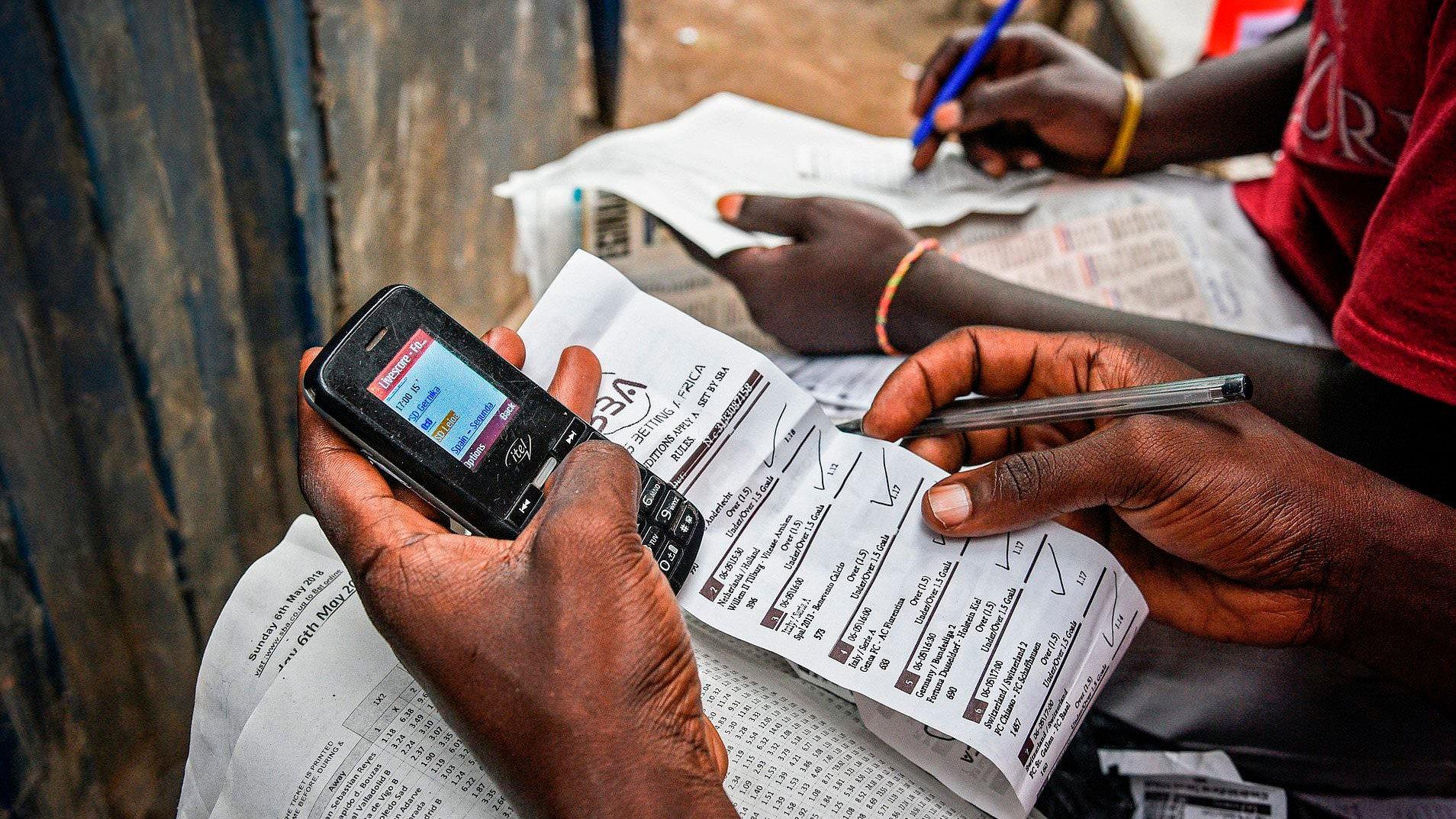
The betting shop is on every corner now. In Lagos, Accra, Nairobi, and Johannesburg, you cannot walk a few minutes without seeing one. Bright colours, big screens, and promises of easy money. The ads follow you on social media — "Win big today!" "Turn 100 Naira into 1 Million!" "Your luck is just one bet away." The marketing is aggressive, and it works. Millions of young Africans now see sports betting not as a gamble, but as a legitimate income stream. Some even view it as their way out of poverty.
Let us be honest about what is happening. You are not stupid. You know the odds are against you. But when you are earning a survival wage, when your salary barely covers rent and food, the promise of quick money is intoxicating. You tell yourself you are different. You tell yourself you will stop when you win big. You tell yourself this is just a bit of fun.
But here is the truth: sports betting is quietly destroying your financial future, and the math proves it.
The Hope You Do Not Say Out Loud
Before we get into the numbers, let us name the emotion. Because most people who talk about betting do not actually understand why you do it.
Hope. You are tired of struggling. You are tired of watching others have things you cannot afford. You see betting as a chance — perhaps your only chance — to change your situation. That hope is real, and it is powerful.
Desperation. The economy is brutal. Jobs are scarce. Prices keep rising. You feel like you are running out of options. Betting feels like a lifeline, even if it is a fragile one.
Shame. You know you should not be doing this. You hide it from family. You lie about where your money went. You tell yourself you will stop, but you do not. The shame makes it worse, and the worse it gets, the more you bet to try to recover.
Confusion. You see others winning — or at least they post about winning. You wonder why it is not you. You try different strategies. You read tips online. You convince yourself you just need to figure out the system.
Here is what you need to hear: the system is designed for you to lose. It is not about luck. It is not about skill. It is about math. And the math is not in your favour.
How the Apps Are Rigged: The Math You Need to See
Let us do some basic arithmetic.
Sports betting companies are not charities. They are businesses. They make money by setting odds that ensure they profit regardless of the outcome. This is called the "overround" or "vigorish" — the built-in edge that guarantees the house wins over time.
Imagine a simple coin toss. The true odds should be 1:1. But a betting company will offer 1.9:1 or even 1.85:1. Over 100 bets, if you stake ₦100 each time, you will win 50 times and lose 50 times. But instead of receiving ₦100 each win, you receive ₦95 or less. You end up with ₦4,750 instead of ₦5,000. You have lost ₦250 without doing anything wrong.
Now multiply that across thousands of bettors and millions of bets. The house always wins.
But the odds are worse than a coin toss. Football matches have 3 possible outcomes — home win, draw, away win — but betting companies adjust odds to always favour the house. The true probability of a correct bet is often less than 50%, and the payout is always less than the true risk. Over time, you will lose more than you win. It is not luck. It is mathematics.
Consider this: In Nigeria, the National Lottery Regulatory Commission reported that the gaming industry generated over ₦1 trillion in revenue in 2023. Think about where that money comes from. It comes from young people — some earning just ₦50,000 a month — spending their limited income on bets they are statistically likely to lose. The money does not disappear. It goes to the betting companies and the government through taxes.
In Ghana, the Gaming Commission collects millions of cedis in taxes from betting companies annually. That money does not come from the companies' profits — it comes from the losses of ordinary gamblers. In Kenya, the Betting Control and Licensing Board reports similarly staggering figures. These companies are not struggling. They are thriving. And they are thriving because people are losing.
Why You Feel Like You Are Winning Even When You Are Losing
Here is the psychological trick. Betting apps do not just take your money. They keep you coming back. They show you "winnings" that are actually just returns of your own money. They give you small wins to keep you hopeful. They send notifications to pull you back in when you are about to stop.
On platforms like SportyBet, BetKing, and 1xBet, the experience is intentionally designed to be addictive. The interface is colourful and engaging. The process is fast — just a few clicks and you are in the action. Cash-outs appear instantly, reinforcing the behaviour. Bright colours flash, anthems play, and the site assures you that you are not gambling — you are just "having fun." But "fun" is the engine of addiction. The longer you stay, the more you lose.
This is the same technique used by casinos worldwide. The difference is that African betting apps are often less regulated, and they are targeting a population that can least afford to lose.
The Real Cost: What You Are Actually Giving Up
Let us be practical. If you spend ₦1,000 a day on betting, that is ₦365,000 a year. In Ghana, GHS 10 a day is GHS 3,650 a year. In Kenya, KES 200 a day is KES 73,000 a year. That is not pocket change. That is money that could have gone to something real.
Think about what you could do with that money:
- A business investment — stock for a small shop, materials for a tailoring business, ingredients for a food stall.
- A professional certification — courses in digital marketing, coding, project management, or graphic design.
- An emergency fund — money to cover unexpected medical bills, car repairs, or family needs.
- An education fund — school fees for yourself or your children.
Instead, that money disappears in a few minutes. You have nothing to show for it. No product. No skill. No safety net. Just the memory of a bet you should not have made.
And it is not just the money. It is the time. The hours spent studying fixtures, checking odds, watching matches you do not actually care about, and scrolling through betting forums. Time you could have spent learning a skill, starting a side hustle, or building something that actually grows.
A Real Example
In Nigeria, a young man earning ₦50,000 monthly as a security guard spent ₦10,000 monthly on bets. Over a year, that was ₦120,000. He believed he was "studying" the game, but his net winnings were negative. Had he invested that ₦10,000 monthly in learning a digital skill — say, social media management, virtual assistance, or simple web design — he could have built an income stream that actually grew.
Instead, he is still betting, still hoping, and still struggling.
The Social Cost: What People Do Not Talk About
There is another cost to betting that nobody talks about enough.
Relationships break. When you are betting, you are not fully present. You are distracted. You are irritable when you lose. You hide things from your partner. You make promises you cannot keep. Trust erodes.
Debt grows. When you run out of money, you borrow. From friends. From family. From loan apps with crushing interest rates. The debt becomes a trap, and the only way out you can see is another bet.
Your self-worth plummets. Every loss feels like a personal failure. You tell yourself you are unlucky, but deep down, you wonder if you are just not smart enough to figure it out. The shame is corrosive.
You become trapped in a cycle. The worse you feel, the more you bet. The more you bet, the worse you feel. It is a downward spiral, and it is difficult to break.
The Hard Truth: Betting Will Not Save You
Here is what you need to accept. Sports betting will not make you rich. The few people who win big are the exception, not the rule. And even many of those winners end up losing everything later because they do not know how to manage sudden wealth.
The only guaranteed winners are the betting companies. They take money from millions of hopeful people and use it to fund their expansion, pay their staff, and line their executives' pockets.
If you want to change your financial future, betting is not the answer. The answer is building something real. Something that grows. Something that is not based on luck.
Redirecting That Same Risk-Taking Energy
Here is the thing: the energy you put into betting — the research, the discipline, the willingness to take risks — is not inherently bad. It is the direction that is wrong.
You are already willing to invest time and money into something with uncertain returns. You are already willing to learn about markets (football leagues, player stats, odds). You are already willing to accept short-term losses for the chance of long-term gains.
Now imagine if you directed that same energy toward something that actually builds value.
Digital skills. Learn social media management, content creation, graphic design, or data analysis. There is a global market for these skills. You do not need a degree. You need dedication and practice.
Content creation. Start a YouTube channel, a blog, or a TikTok account. Share what you know. Build an audience. Monetize your knowledge.
E-commerce. Sell things online. Whether it is clothes, food, or digital products, there is a growing market for online sales across Africa.
Freelancing. Platforms like Upwork, Fiverr, and Freelancer connect African workers with global clients. You can earn in dollars while living in your home country.
Small business. Use the money you would have spent on betting to start a small business. Even a small capital investment can grow into a sustainable income stream over time.
The shift is not easy. It requires patience. It requires accepting that success will not come overnight. But unlike betting, the odds are in your favour. Your skills grow. Your network expands. Your income increases.
What to Do If You Are Already in Too Deep
If you are reading this and you recognize yourself, you might feel stuck. You might have lost money you cannot afford to lose. You might have debt you do not know how to repay. You might feel hopeless.
Here is what you can do:
Stop today. Not tomorrow. Not after the next match. Today. The hardest part is stopping, but it is also the most important.
Acknowledge what happened. Do not blame yourself. Do not wallow in shame. Just accept that you made a mistake and move forward.
Tell someone. You do not have to tell everyone, but tell someone you trust. The secrecy makes it worse. Having someone who knows can help keep you accountable.
Delete the apps. Remove the temptation. Unsubscribe from betting notifications. Block betting websites if you need to.
Replace the habit. Find something else to do with your time and money. Start a small business. Learn a skill. Join a club. The goal is to fill the space that betting occupied with something positive.
Seek support if needed. If you find that you cannot stop even when you want to, consider speaking to a counsellor or joining a support group. Gambling addiction is real, and it is not a moral failing. It is a problem that can be treated.
Sports betting is not a solution. It is a distraction. It promises escape but delivers more struggle. It takes your money, your time, and your hope, and gives you almost nothing in return.
You deserve better. Not because you are special or lucky, but because you are human. You have potential. You have skills. You have the ability to learn and grow.
Do not let betting companies profit from your desperation. Redirect your energy toward something that actually works. It will be harder in the short term. But in the long term, it is the only path that leads anywhere worth going.
Start today. Stop betting. Start building.
Sources & Methodology
Delviews article pages include source notes, correction links and editorial context so readers can evaluate trust at a glance.
Spotted an error? Submit a correction